

What International Buyers Should Know Before Sourcing Industrial Components From India
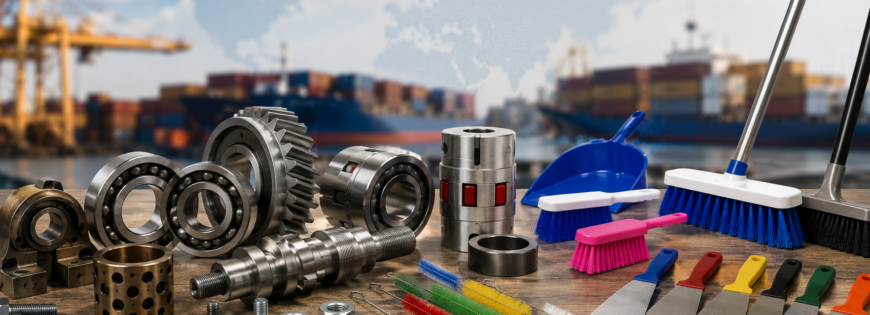
Sourcing industrial components from India has become a strategic move for manufacturers across the world — but it’s not as simple as sending an RFQ and waiting for a quote. If you’re an international buyer evaluating Indian suppliers for industrial brushes, dust collector bags, or rubber sealing solutions, here’s what actually matters before you commit.
Verify Manufacturing Capability, Not Just Trading Capability
India has a large number of trading companies that pose as manufacturers. The distinction matters more than most buyers realize — a trader adds a markup and a communication delay between you and the factory floor, and has no real control over quality or timelines. Ask directly: does the supplier own or operate the manufacturing facility, or do they outsource production? A manufacturer with in-house production, like Krishna Enterprises’ 20+ years of operations from Haryana, can control tolerances, materials, and lead times far more reliably than an intermediary.
Custom Specifications Are the Norm, Not the Exception
Unlike consumer goods, industrial components rarely ship “off the shelf” for cross-border B2B orders. Brush trim length, bristle material, dust bag micron rating, rubber seal compound — these all need to match your exact operational environment. Before finalizing a supplier, confirm they can work from your technical drawings, dimensional specs, or physical samples, and that they’ll provide a pre-production sample for approval. A supplier unwilling to do a sample run first is a red flag, regardless of price.
Understand the Quality Inspection Process
Ask what quality checks happen at each stage — raw material inspection, in-process checks, and final inspection before dispatch. Reputable manufacturers will walk you through this without hesitation, and many will accommodate third-party inspection agencies if you require them for compliance in your home market (especially relevant for the EU, US, and Gulf markets with specific import documentation requirements).
Factor In Realistic Lead Times
Custom industrial components typically require 3–6 weeks of production time depending on order volume and specification complexity, plus shipping. Any supplier promising unrealistically fast turnaround on a fully custom order should prompt further questions — either they’re overstating capacity or underdelivering on quality control steps.
Communication and Documentation Matter More Than You’d Think
Cross-border sourcing fails more often due to documentation gaps — incorrect HS codes, missing certificates of origin, inconsistent packing lists — than due to product defects. A supplier with export experience across multiple regions will have this process tightened; a new exporter may not. Ask for references from buyers in your specific region, not just generic testimonials.
Pricing: Competitive Doesn’t Mean Cheapest
India’s manufacturing cost advantage is real, driven by efficient production practices and material sourcing — but the lowest quote in your inbox is rarely the best long-term decision. Weigh cost against consistency: a supplier who delivers the same quality on order 50 as they did on order 1 is worth more than marginal per-unit savings.
The Bottom Line
Sourcing from India works best when you treat it as a partnership, not a transaction. Vet manufacturing capability, insist on samples, clarify inspection protocols, and set realistic expectations on lead time — and you’ll find Indian manufacturers, particularly those with decades of export experience, deliver reliable, cost-effective industrial solutions at scale.
Comments (8)
Riva Collins
It’s no secret that the digital industry is booming. From exciting startups to need ghor fore
global and brands, companies are reaching out.
CaseThemes
It’s no secret that the digital industry is booming. From exciting startups to need ghor fore global and brands, companies are reaching out.
Riva Collins
It’s no secret that the digital industry is booming. From exciting startups to need ghor fore
global and brands, companies are reaching out.
CaseThemes
It’s no secret that the digital industry is booming. From exciting startups to need ghor fore global and brands, companies are reaching out.
Obila Doe
It’s no secret that the digital industry is booming. From exciting startups to need ghor fore
global and brands, companies are reaching out.
CaseThemes
It’s no secret that the digital industry is booming. From exciting startups to need ghor fore global and brands, companies are reaching out.
Obila Doe
It’s no secret that the digital industry is booming. From exciting startups to need ghor fore
global and brands, companies are reaching out.
CaseThemes
It’s no secret that the digital industry is booming. From exciting startups to need ghor fore global and brands, companies are reaching out.